A standard commercial deep cleaning schedule consists of daily high-touch surface disinfection, weekly restroom detailing, and monthly deep cleans for baseboards or vents. More intensive professional services, such as carpet extraction or kitchen sanitation, should be performed quarterly or semi-annually depending on the specific facility requirements. Adhering to this routine ensures a healthy environment and extends the lifespan of facility assets.
You know that feeling when your lobby looks clean at a glance, but a closer look reveals layers of dust in the corners and stains that just will not budge? For Sanpete County business owners, daily maintenance often masks a deeper decline in facility health. Ignoring these hidden areas does more than hurt your aesthetics; it shortens the lifespan of your flooring and compromises indoor air quality. At Gobes Cleaning, we understand that a clean workspace is a productive one. This guide outlines how to establish a professional commercial deep cleaning schedule tailored to our local climate. You will learn how to distinguish between maintenance and deep cleans, determine the right frequency for your industry, and discover how a proactive approach ultimately protects your bottom line.
Understanding the Commercial Deep Cleaning Schedule: Maintenance vs. Deep Cleaning
Managing a commercial property involves two distinct levels of care. Daily janitorial maintenance focuses on the visible; it involves emptying trash bins, wiping down counters, and basic floor sweeping. These tasks keep a facility operational and presentable for customers on a day-to-day basis. However, a professional commercial deep cleaning schedule addresses the invisible and the neglected. It is a structured plan that moves beyond surface aesthetics to target accumulated grime, bacteria, and allergens that daily routines often overlook.
A deep clean involves specialized tasks such as vacuuming HVAC vents, scrubbing floor grout, and disinfecting high-touch points with medical-grade precision. While daily cleaning keeps things tidy, deep cleaning utilizes industrial-strength products and advanced equipment to restore surfaces to their original condition. Standard mopping, for instance, often pushes dirt into corners or porous materials; professional deep cleaning uses high-pressure extractors and chemical solutions designed to lift that buildup out entirely.
Implementing professional sanitation and maintenance services on a regular schedule is critical for asset preservation. Constant dust accumulation in air vents forces HVAC systems to work harder, potentially shortening their lifespan. Similarly, neglected hard floors can suffer permanent damage from embedded grit. By following a rigorous schedule, business owners ensure their properties remain healthy environments for employees while protecting their long-term financial investments. This proactive approach prevents the need for premature replacements and maintains a standard of hygiene that daily wiping simply cannot provide.
Frequency Guidelines: How Often Does Your Facility Need a Deep Clean?

Determining the correct interval for your commercial deep cleaning schedule depends primarily on the intensity of your operations and foot traffic. A generic approach fails to account for the specific demands of Sanpete County industries. For instance, a diner in Ephraim operating 16 hours a day faces significantly more grease accumulation and floor wear than a small law office in Manti that sees only a few clients per week.
Facilities running 12 to 16 hours per day generally require professional deep cleaning twice as often as those with standard 8 hour shifts. High traffic areas accumulate biofilm and particulate matter at an accelerated rate, necessitating professional intervention to prevent permanent staining or mechanical failure of HVAC systems. The following table provides a breakdown based on facility type and usage levels:
Facility Type | Recommended Frequency | Key Considerations |
|---|---|---|
Commercial Kitchens & Diners | Every 3 to 6 Months | Heavy use (12+ hours) requires 3 month intervals to mitigate fire risk. |
High-Traffic Offices (Medical, Sales) | Quarterly | Focus on high touch sanitation and carpet extraction. |
Low-Traffic Offices (Consulting) | Semi-Annually | Targets dust mitigation and hard floor conditioning. |
Retail Stores & Boutiques | Quarterly | Aligns with seasonal transitions and inventory cycles. |
For retail storefronts, a quarterly schedule aligns with the seasonal shifts that bring outside contaminants into the building. While daily staff can manage the sales floor, a professional team focuses on the specialized maintenance tasks that preserve the physical structure, such as grout scrubbing and high level dusting. Local business owners can schedule a commercial cleaning consultation to determine a bespoke timeline that accounts for their specific square footage and operational hours.
Understanding the nuance between light and heavy use ensures you are not overspending on unnecessary services while also not neglecting areas that could lead to costly repairs. You can learn more about our expert cleaning team and how we tailor these frequencies to the unique environmental pressures of the Sanpete Valley, ensuring your facility remains compliant and professional.
The Impact of Sanpete County Climate on Your Cleaning Timeline
The physical environment of the Sanpete Valley dictates a unique timeline for your commercial deep cleaning schedule that generic national guidelines often overlook. Unlike businesses in paved metropolitan areas, properties in Mt. Pleasant or Fairview must contend with the regional "mud season." During the spring runoff, local businesses experience a surge in heavy, mineral-rich mud being tracked into lobbies and workspaces. This phenomenon requires a targeted deep clean of carpets and hard floor surfaces immediately following the thaw to prevent permanent staining and grit abrasion.
Agricultural dust is another localized factor that accelerates the need for specialized maintenance. High winds across the valley carry fine soil particles that settle into HVAC vents and coat window tracks. In Sanpete County, businesses often need vent vacuuming and window detailing more frequently than their urban counterparts to maintain indoor air quality. A business in Mt. Pleasant faces different environmental stressors than one in a larger metro area; while urban buildings deal with industrial smog, Sanpete properties face high volumes of organic particulate matter. If your facility is located near active farmland or unpaved access roads, your schedule must prioritize particulate removal to protect sensitive electronics and inventory. Factoring in these environmental pressures ensures that your maintenance plan remains proactive, addressing the specific challenges of the Utah climate before they lead to property degradation.
What Should Be Included in a Deep Cleaning Service?

A comprehensive commercial deep cleaning schedule transforms a facility by addressing layers of buildup that standard janitorial routines cannot reach. While daily checklists ensure restrooms are stocked and floors are swept, a professional deep clean focuses on restorative tasks and high-level sanitation. This service includes detailed disinfection of high-touch points, specifically light switches and door handles, using industrial-strength agents to eliminate pathogens that survive standard wiping.
Air quality and structural details are also prioritized. A professional team vacuums HVAC vents and returns to remove accumulated particulates, which is a necessity given the local agricultural dust levels discussed previously. Baseboards and window tracks, which often collect grime over months of operation, are hand-cleaned to prevent permanent staining. The scope of work moves beyond the surface to include specialized restorative tasks:
Grout Scrubbing: Utilizing high-pressure agitation and specialized chemicals to lift grease and minerals from porous tiled areas.
Hard Floor Stripping and Waxing: Removing aged, yellowed finish and applying new industrial-grade protective layers to preserve the floor substrate.
Upholstery Cleaning: Deep extraction of allergens, odors, and soil from office chairs and waiting room furniture.
High-Level Dusting: Clearing particulates from the tops of cabinets, exposed pipes, and light fixtures.
Our team incorporates specialized maintenance tasks into every project, utilizing advanced extraction equipment that exceeds the capabilities of standard commercial vacuums. These intensive procedures are designed to extend the life of your facility’s assets. For businesses requiring a specific scope of work, you can schedule a commercial cleaning consultation to align these tasks with your operational needs. By focusing on these deep aspects, you ensure a level of professional sanitation and maintenance services that protects both employee health and property value.
Industry Specifics: Commercial Kitchen Deep Cleaning Schedule
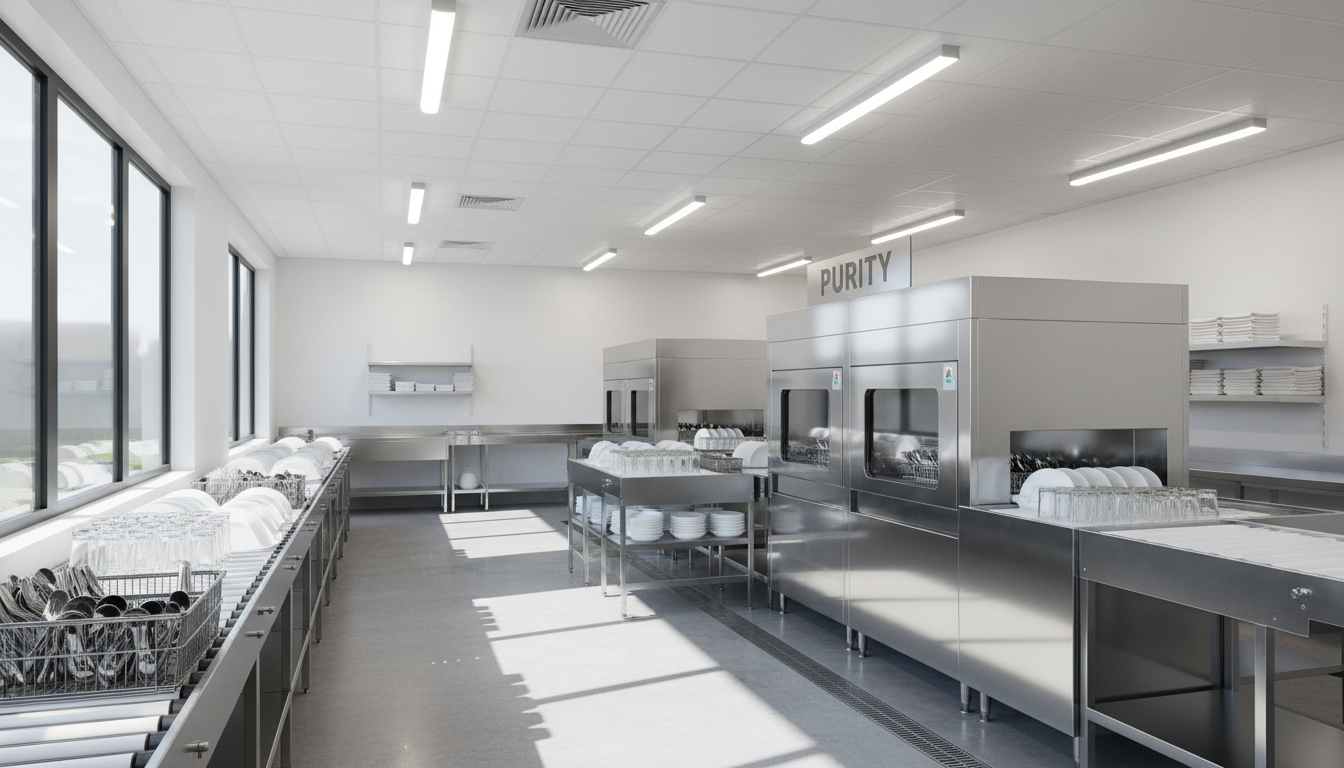
Commercial kitchens in Sanpete County operate under intense pressure, necessitating a specialized commercial deep cleaning schedule that prioritizes fire safety and food hygiene. While daily staff handle surface sanitation, the 80/20 rule of kitchen maintenance suggests that 80% of potential hazards, specifically grease accumulation in exhaust systems and behind heavy equipment, stem from 20% of the most high-activity areas. These critical zones require professional extraction methods that go beyond the capabilities of standard housekeeping.
Authoritative industry standards suggest that the frequency of these cleanings must scale with usage. For high-volume establishments like local diners in Ephraim that operate 12 or more hours per day, professional deep cleaning is required every three months. This frequency is essential to mitigate the risk of grease fires and ensure compliance with health regulations. Moderate-use kitchens can typically adhere to a six-month cycle, while light-use facilities, such as community centers or small cafes, may only require a full professional intervention every twelve months.
Our about our expert cleaning team page details how we utilize industrial-strength degreasers and high-pressure steam to reach these neglected areas. Adhering to these authoritative frequency recommendations prevents the volatile buildup of organic oils, protecting both your staff and your property investment. Businesses looking to refine their maintenance strategy can schedule a commercial cleaning consultation to evaluate their specific grease output and usage patterns.
Cost-Benefit Analysis: Why Sticking to a Schedule Saves Money
Adhering to a rigorous commercial deep cleaning schedule is a strategic financial decision rather than a mere operational expense. Neglecting deep-level maintenance allows particulate matter to accumulate in expensive assets, leading to premature failure. For example, embedded grit in carpets acts as a permanent abrasive that severs fibers under foot traffic, often forcing a full replacement years before the manufacturer’s projected lifespan. Similarly, allowing agricultural dust from the Sanpete Valley to clog HVAC returns forces systems to cycle more frequently, which increases monthly utility bills and risks a multi-thousand-dollar compressor failure.
By investing in professional sanitation and maintenance services, business owners shift from reactive repairs to proactive preservation. A facility that remains consistently sanitized also sees a measurable impact on the bottom line through improved employee productivity. Clean air and allergen-free workspaces reduce the frequency of sick leave, while a well-maintained environment fosters a professional culture that improves morale. Long-term maintenance costs drop significantly when surfaces are protected by regular stripping, waxing, and deep extraction. You can schedule a commercial cleaning consultation to map out a plan that balances service costs against the substantial savings of avoided capital expenditures. Our about our expert cleaning team page highlights how we utilize industrial-strength methods to maximize these life-extending benefits for your property investment.
Consistent cleaning schedules are the backbone of a professional business environment in Sanpete County. By staying ahead of routine maintenance, you ensure a safe, welcoming space for both employees and clients. While managing these tasks internally is possible, balancing daily operations with deep cleaning often becomes overwhelming. If you want expert help maintaining your facility, you can explore our comprehensive Services to see how we support local businesses. We provide the tools and expertise needed to keep your workspace pristine while you focus on your growth.